

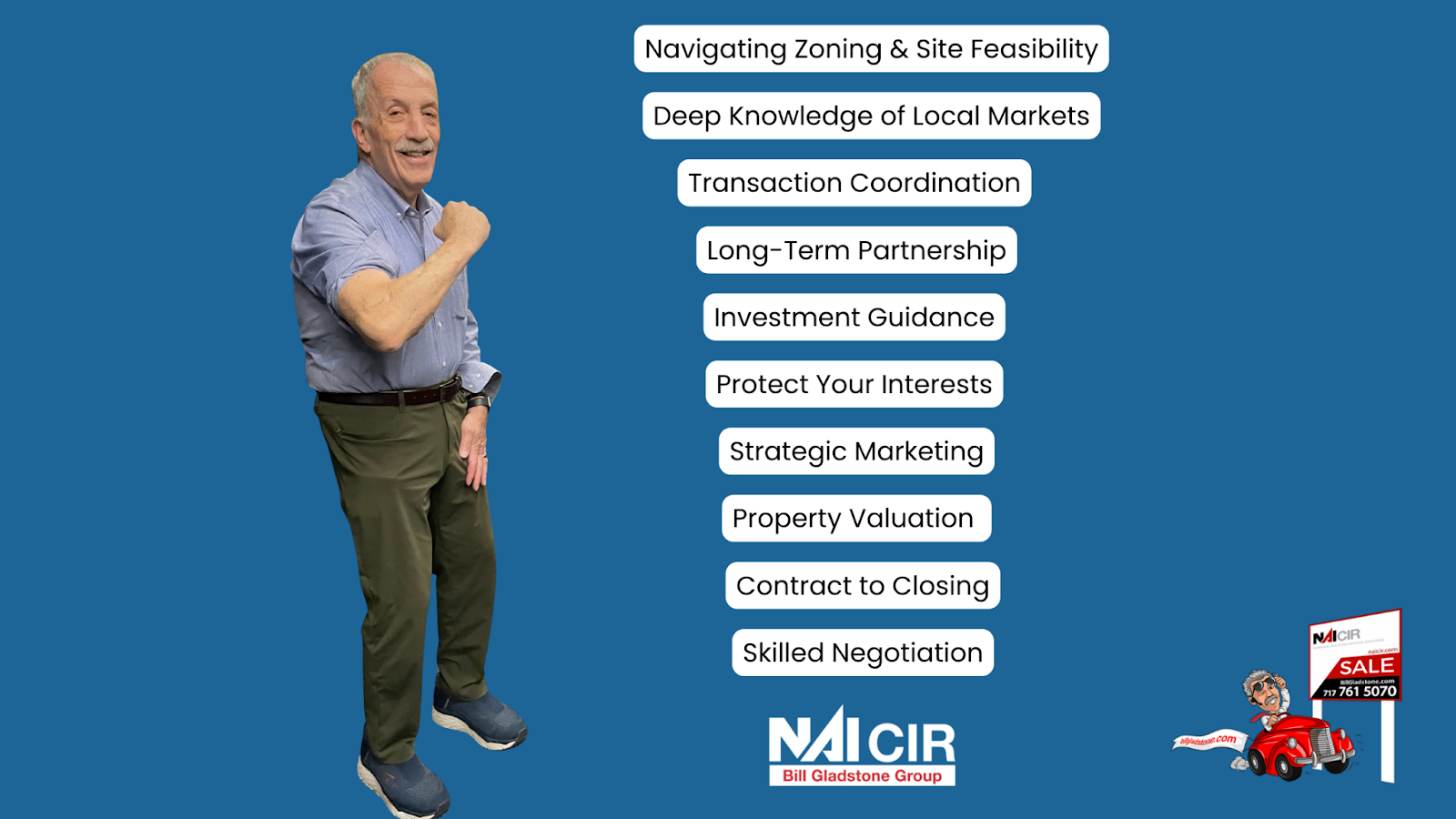
Commercial real estate can be one of the most meaningful investments a business or property owner makes — and also one of the most complex. From zoning regulations and market conditions to financing, negotiation, and long-term asset planning, each decision has ripple effects. That’s why working with a qualified commercial real estate broker isn’t just helpful — it’s strategic.
A commercial real estate broker brings market knowledge, transactional expertise, and negotiation skills that safeguard your interests and move your goals forward. At The Bill Gladstone Group, we guide investors, business owners, and landlords throughout the Greater Harrisburg region — helping them make well-informed decisions with clarity and confidence.
Here’s how a broker adds value at every step of the process.
1. Deep Knowledge of Local Market Dynamics
Commercial real estate is shaped heavily by local conditions — infrastructure improvements, school district boundaries, township priorities, workforce movement, tax levels, and development plans.
A broker helps you evaluate:
- Which municipalities are encouraging commercial growth
- Where traffic patterns and accessibility support visibility and success
- How demographics and workforce trends influence ideal locations
Which corridors are strengthening (and which are slowing)
For example, shifting workplace trends have reshaped how businesses use space — a topic we explored in The Quiet Revolution: Transforming Office Spaces Post-Pandemic and The Impact of Generation Z on Commercial Real Estate Demand.
This insight protects your investment and ensures alignment with future demand, not just current conditions.
2. Accurate Property Valuation and Investment Guidance
Determining a property’s value requires more than looking at recent sales. A broker conducts an in-depth evaluation that includes:
- Comparable property performance (rents, sales, vacancies)
- Building age, condition, and improvement needs
- Zoning and permitted uses (which may increase or limit value)
- Return on investment potential and holding strategy
- Local tax rates and incentives that affect cost of ownership
If you’re evaluating properties as part of your financial portfolio, you may find insights in:
→ Is it Smart to Have Real Estate in Your Portfolio?
→ Future-Proofing Your Real Estate Portfolio: Strategies for Long-Term Success
This helps you avoid overpaying and ensure the property truly supports your long-term goals.
3. Navigating Zoning, Regulations, and Site Feasibility
Even the perfect building can become the wrong investment if zoning doesn’t allow your intended use. Brokers help you understand what is (and isn’t) possible before you commit.
This includes guidance on:
- Permitted uses and special exceptions
- Parking requirements
- Utility access and municipal service considerations
- Environmental assessments (Phase I/II)
- Historic, floodplain, or easement restrictions
Learn more in:
→ Demystifying Zoning for Commercial Real Estate in Greater Harrisburg, PA
This due diligence minimizes risk and prevents costly surprises.
4. Strategic Marketing for Sellers and Landlords
The goal is not simply exposure — it’s targeted exposure to the right decision-makers.
A broker brings:
- Professional listing presentation (photography, floor plans, key facts)
- Digital reach across commercial listing platforms
- Email and broker network distribution
Local business community relationships - Property tours and qualification of interested parties
For property owners, we recommend exploring:
→ Tips for Marketing Commercial Real Estate Listings: A Guide by The Bill Gladstone Group
→ Marketing Magic: Insider Tips for Promoting Your Commercial Real Estate Listings
This ensures your property attracts qualified buyers or tenants, not just inquiries.
5. Skilled Negotiation That Protects Your Interests
Negotiation in commercial real estate isn’t just about the price — it’s about the terms.
A broker negotiates:
- Rent structure or purchase price
- Lease term length and renewal options
- Buildout or renovation responsibility
- Maintenance, repairs, and capital improvement obligations
- Occupancy timelines and exit flexibility
For a deeper dive:
→ How to Successfully Negotiate a Commercial Lease: Tips for Tenants and Landlords
The right negotiation today can save years of cost and stress later.
6. Transaction Coordination from Contract to Closing
A broker ensures all moving pieces progress smoothly and on schedule.
This often includes coordinating with:
- Attorneys
- Lenders and financing partners
- Inspectors and appraisers
- Local township officials
- Environmental and engineering specialists
If financing is part of your decision, you may find this helpful:
→ Navigating Commercial Real Estate Financing: Tips and Options
This keeps the process efficient — and prevents delays that stall momentum.
7. Long-Term Partnership and Strategy
A strong broker relationship doesn’t end at closing.
Your broker acts as a continuing advisor, helping with:
- Market updates affecting your property’s value
- Recommendations on tenant retention and lease renewals
- Identifying expansion, relocation, or reinvestment opportunities
- Portfolio balance and asset performance reviews
Investments evolve. Your strategy should, too.
The Bottom Line
A commercial real estate broker adds value by providing clarity, structure, and strategic expertise — helping you make sound decisions and avoid pitfalls. Whether you’re securing your first property, expanding your business footprint, or optimizing an investment portfolio, a broker helps ensure your goals are supported every step of the way.
At The Bill Gladstone Group, we’re committed to helping business owners, investors, and property owners succeed here in the Greater Harrisburg region. We understand this market — because we live, work, and invest in it, too.
Ready to talk through your next move?
Our team is here to help — with insight, experience, and a local-first approach.
📞 Contact The Bill Gladstone Group
Serving Dauphin, Cumberland, Perry, Lebanon, and York Counties.